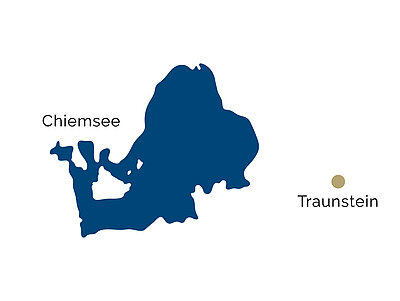
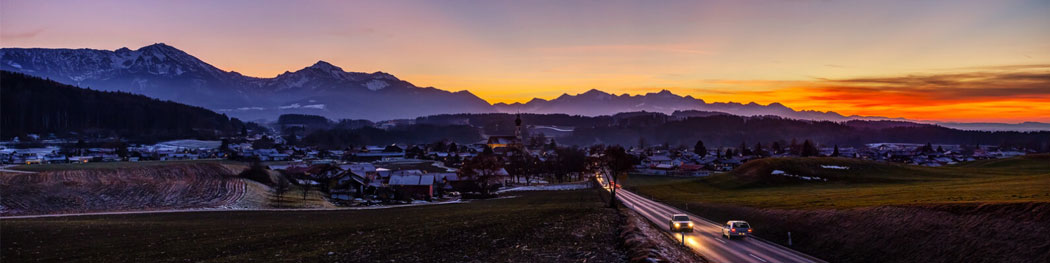
Traunstein is centrally located in the Chiemgau region and combines proximity to nature with the functions of a city of regional importance. As a regional hub for southeastern Upper Bavaria, Traunstein plays a key role in providing essential services, employment, education, healthcare, and transportation. At the same time, its location between Lake Chiemsee and the Chiemgau Alps offers excellent opportunities for leisure and recreation.
This combination is particularly appealing to those looking to settle here. Traunstein is not a remote Alpine village, but a practical place to live with a comprehensive regional infrastructure. As a result, the city is ideal for people who want to live close to nature while also benefiting from short distances, quality amenities, and reliable services.
Even within the city limits, it’s easy to find your way around. The town square forms the lively Zentrum, while the train station, the Altstadt, the Au, and Salinenpark are all well connected. This clear structure makes Traunstein both urban and manageable, ensuring a high quality of life in everyday living.
Among the key residential and landmarks in Traunstein are the Altstadt surrounding the town square, the train station area, the Au along the Traun River, and the incorporated areas of Haslach, Wolkersdorf, Kammer, and Hochberg. This creates a variety of residential areas and living experiences within the city’s well-organized layout—ranging from central and urban to quiet and closer to nature.
Anyone looking to rent or buy an apartment in Traunstein is therefore choosing much more than just an attractive address in the Chiemgau region. The city combines urban life, a strong infrastructure, comprehensive healthcare, a historic Altstadt, and proximity to nature.
This mix makes Traunstein particularly appealing to families, working professionals, and commuters. They benefit from short distances, excellent amenities, and diverse residential areas within a compact and regionally significant city.
From a residential perspective, Traunstein stands out for its balanced combination of a historic Altstadt and functional strengths. As the capital of the Chiemgau region and a regional hub for southeastern Upper Bavaria, the city offers more comprehensive amenities, a wider range of services, better transportation connections, and a more diverse urban experience than many smaller towns in the region.
Another key advantage of the location is its strong medical care system. The Traunstein Hospital is an academic teaching hospital affiliated with LMU Munich, is designated as a specialized care facility, and has 548 beds. This makes Traunstein not only historically and touristically significant but also a particularly well-equipped place to live in everyday life.
This combination makes the city an attractive place to live for families, working professionals, commuters, and people who value reliable healthcare. Traunstein combines living, working, amenities, and leisure in a regionally significant and well-organized city.
Typical resident groups in Traunstein include, for example:
| Munich Airport | Munich City Center |
|---|---|
| 105,0 km | 103,0 km |


The historic downtown area features small specialty shops, traditional department stores, and shops for everyday needs. Weekly and farmers’ markets on the town square round out the local supply of regional products and make the Zentrum a popular place for shopping and strolling.
Traditional inns, cafés, and restaurants define the local dining scene. Traunstein’s long-standing beer tradition plays a special role; it is carried on to this day by three local breweries and is closely linked to the region’s pub culture.
The Traunauen wetlands, signposted circular hiking trails, and the proximity to lakes and mountains offer excellent opportunities for leisure and recreation. Sports facilities, nature experiences, and family-friendly events round out the offerings and make Traunstein a family-friendly place to live at every stage of life.