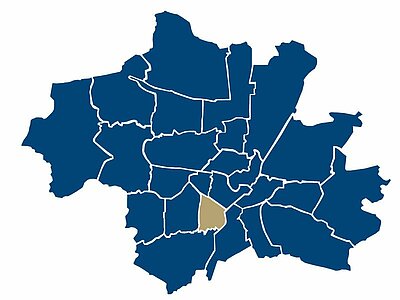
Sendling is located in a transitional area that is particularly prominent in Munich: close to downtown, but no longer in the city center itself. The district borders Schwanthalerhöhe to the north, Ludwigsvorstadt-Isarvorstadt to the northeast, Untergiesing-Harlaching to the east, Thalkirchen-Obersendling-Forstenried-Fürstenried-Solln to the south, and Sendling-Westpark to the west. As a result, Sendling is very well integrated and benefits from many neighboring residential and recreational areas.
When considering Sendling as a place to live, it’s important not to view it in isolation. Residents here also make use of connections to Isarvorstadt, Thalkirchen, Obersendling, and Sendling-Westpark in their daily lives. It is precisely this location between the city center, the Isar area, and the southwestern residential neighborhoods that makes Sendling so attractive to many prospective residents: central, yet not purely urban; urban, yet with easy access to green spaces and recreational areas.
Historically, Sendling is a neighborhood where residential and commercial areas have developed closely side by side. Following its incorporation in 1877, numerous commercial and industrial businesses settled along the railroad lines leading toward Wolfratshausen and Rosenheim; at the same time, residential developments were built for the workers of that era, in part through housing cooperatives. Many of these structures continue to shape the cityscape in the northern half of the district to this day.
It is precisely this mix that appeals to today’s prospective residents: Sendling is neither a purely prestigious neighborhood of older buildings nor a purely functional area. Instead, it features a mix of classic multi-family homes, cooperative apartment buildings, postwar housing, individual modernized houses, and quieter residential streets. Sendling combines a central location with diverse—and in some cases quiet—residential streets and a highly livable everyday environment.
This neighborhood is appealing, for example, to the following people:
| To the center (Marienplatz) | To the central station | To the airport |
|---|---|---|
| 4,7 km | 3,8 km | 45,7 km |


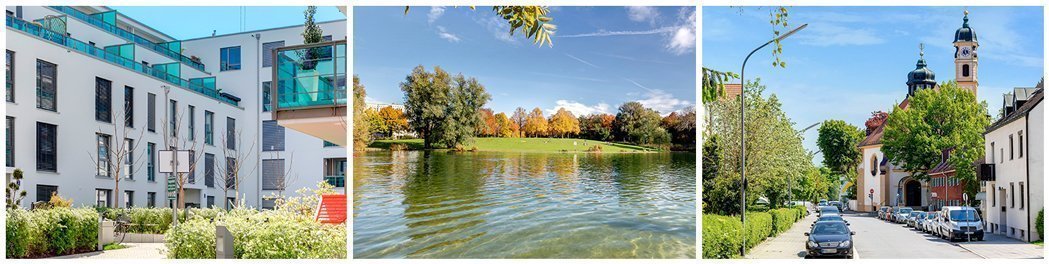
Sendling’s strongest connection to open spaces lies in the direction of Flaucher and the Isar floodplains. The Flaucher grounds originated from the historic picnic spot “Zum Flaucher”; today, they are considered some of the city’s most heavily used green spaces and are particularly popular for swimming, walking, and barbecuing. For many residents, this is a key factor in the area’s livability, because recreational opportunities here are not just an abstract concept but are directly accessible.
Culturally, Sendling today is more vibrant than its former reputation as a working-class and industrial neighborhood would suggest. With the Alte Utting, the Gasteig HP8, and the commercial and cultural areas around the Großmarkt and Lagerhausstraße, the neighborhood boasts several venues that give Sendling a contemporary, urban character. This makes the neighborhood particularly appealing to people who want to live not only in a quiet area but also in a vibrant environment.
Sendling is characterized in everyday life by a diverse and well-functioning network of local shops. Many small shops, as well as numerous restaurants, cafés, and beer gardens, offer a diverse selection that fits well with the neighborhood’s established character. Especially around Harras, Plinganserstraße, and the northern areas, it’s easy to incorporate errands and dining options into your daily routine.